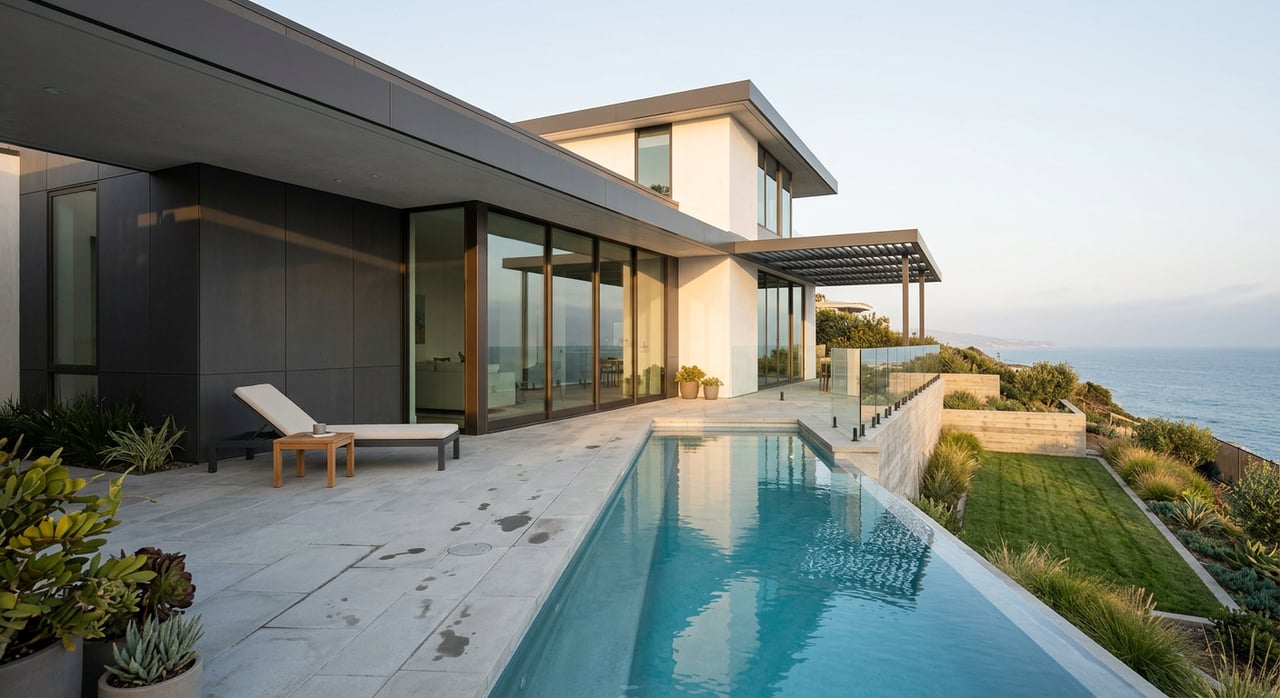
If you are weighing the Riviera against Marquez Knolls, or the bluffs against the Highlands, you are not alone. In Pacific Palisades, the mountain‑to‑sea setting shapes every block, which is why two homes a mile apart can live very differently. This guide helps you compare the Palisades’ distinct luxury enclaves by topography, views, outdoor access, village convenience, and buildability so you can focus your search with confidence. Let’s dive in.
Quick orientation: mountain to sea
Pacific Palisades sits where the Santa Monica Mountains meet the Pacific, which creates bluff pockets, mid‑slope hillsides, and higher inland tracts. That physical gradient is the number one driver of lifestyle and housing options here. For a high‑level overview, review the neighborhood’s geography and history on Pacific Palisades’ Wikipedia page.
Walkability in the central core is shaped by the Palisades Commercial Village & Neighborhoods Specific Plan, which governs massing and improvements around Sunset Boulevard and Via de la Paz. If you are assessing expansion or infill near the Village, check the Specific Plan’s official page for current rules.
How to choose your enclave
Use your top two physical priorities to narrow fast:
- Immediate ocean orientation and bluff living. Look at Castellammare, Via and El Medio Bluffs, and Huntington Palisades.
- Panoramic views with flatter, usable yards. Focus on Marquez Knolls, especially upper streets.
- Large‑lot privacy and newer systems. Explore the Palisades Highlands and gated sub‑tracts.
- Daily walkability and small‑lot charm. Consider the Village core and the Alphabet Streets.
Enclave by enclave
The Riviera
Centered on the Riviera Country Club, the Riviera is a premier hillside enclave with estate‑scale properties. Mid to upper slopes produce long city‑to‑ocean sightlines, including the classic Queen’s Necklace view on clear days. Expect terraced yards and some steep approaches. The club itself is a defining anchor and geographic marker, and you can learn more about it on The Riviera Country Club’s site.
Architecturally, you will find historic Mediterranean and Spanish Revival homes alongside mid‑century properties and contemporary rebuilds. Many lots are larger than Village‑adjacent blocks, and remodels are common. Because of hillside siting and soils, construction often involves retaining walls and geotechnical work, which adds complexity to timelines and budgets.
Outdoor access is excellent. Ridge trailheads and the Backbone Trail system are a short drive, with Temescal and Will Rogers trail connections nearby. For regional context, see the Backbone Trail overview.
Castellammare
Castellammare hugs the coastal bluffs near Pacific Coast Highway by the Getty Villa. Street names and hillside switchbacks hint at Italian coastal inspiration, and many homes enjoy direct ocean or broad coastline views. Lots can be irregular or narrow, and driveway patterns reflect the bluff and PCH geometry. The Getty Villa visitor page is a helpful anchor for this pocket’s location.
Beach and path access are fast here, with short drives to Will Rogers State Beach and bluff‑top walking. When considering new work, plan for coastal engineering and potential bluff setbacks, since usable yards can be smaller than the recorded lot size. Many bluffside parcels fall under dual city and Coastal Commission review, so factor in added permitting. The Coastal Commission’s report archive illustrates the level of coastal analysis often required.
Marquez Knolls
North of the Village, Marquez balances big views with more regular, usable lots. Elevated pads capture sweeping basin and coastline vistas, with the upper streets offering the broadest panoramas on clear days. Compared with cliffside pockets, many parcels here are friendlier to expansion projects due to flatter areas and more predictable geometry.
The housing stock mixes mid‑century ranches, traditional single‑family homes, and newer custom rebuilds. Lots often range from roughly 7,000 to 15,000 square feet. If you want views and a functional yard without the complexities of a bluff edge, Marquez Knolls is a strong candidate.
Via and El Medio Bluffs, plus Huntington Palisades
South of Sunset Boulevard, this bluff‑top ridge runs immediately above Will Rogers and PCH. Orientation to the ocean brings daily breezes and sunsets, and many homes feel perched at the edge of the coastline. Street‑to‑street differences are real, so evaluate each parcel’s bluff position and exposure.
Buildability can be sophisticated. Retaining walls, drainage, and coastal permitting are frequent concerns, and engineered yard solutions are common. If you value the drama of a bluff setting and quick access to the shore, this ridge delivers, with the caveat that entitlement and engineering will shape your project scope.
The Village and Alphabet Streets
The Village is the Palisades’ most walkable center, with smaller blocks, cottage architecture, and the A through F Alphabet Streets forming the densest early street grid. You can run daily errands on foot, and community routines revolve around Sunset and Via de la Paz. For planning context on rebuilds and signage near commercial corridors, review the Specific Plan’s official page.
Lots are smaller, often in the 3,000 to 8,000 square foot range, which favors smart additions and high‑craft renovations over estate‑scale expansions. Expect lower rise condos and tight infill to mix with historic bungalows. If walkability ranks first for you, start here.
Palisades Highlands
Set farthest inland and at higher elevation, the Highlands offers larger footprints, more privacy, and planned tracts, including gated enclaves. Many homes date from the 1980s through the 2000s, and select sub‑tracts provide bigger lots that can exceed 10,000 to 20,000 square feet. The tradeoff is a longer drive to the Village and the beach.
This is a good match if you want space, newer systems, and a quiet suburban feel inside Los Angeles city limits. For general neighborhood orientation, the Pacific Palisades overview is a useful reference.
Rustic Canyon and Chautauqua
These canyon and meadow pockets carry a strong mid‑century pedigree and natural setting. The Eames House, also known as Case Study House No. 8, sits here and exemplifies the area’s architectural heritage. Read its history on the Eames Foundation site.
Irregular canyon lots can make construction staging and access more complex, but the setting rewards you with privacy, filtered light, and a distinct design culture. If you collect architecture and want a green, low‑profile environment, Rustic Canyon belongs on your list.
Recreation, beaches, and trail access
Outdoor access is a Palisades hallmark. The Los Liones trail to Parker Mesa Overlook is a classic ocean‑view hike with a trailhead at the neighborhood’s western edge. For route details and parking context, start with the Los Leones trail page.
Will Rogers State Historic Park anchors the eastern side with hiking, polo grounds, and access to ridge trails that link toward Temescal and the Backbone system. For park information and hours, consult the official Will Rogers State Historic Park page. If living near a trailhead is a must, map options against your preferred enclave early in the search.
Permitting, constraints, and rebuild context
Coastal and hillside settings add both beauty and responsibility. In bluff and seaside pockets, Coastal Act review and potential dual jurisdiction can extend timelines, and you should plan for wave uprush, bluff retreat calculations, and geotechnical studies. The California Coastal Commission’s published reports show the level of analysis commonly requested.
In the Village and adjacent blocks, the Palisades Commercial Village & Neighborhoods Specific Plan governs massing, signage, and certain rebuild parameters. Before drafting plans, check current overlays on the Specific Plan’s page.
The January 2025 Palisades Fire created an active rebuilding phase in parts of the community. The City of Los Angeles issued executive actions in 2025 to accelerate qualified commercial and residential rebuild review. You can read the announcement of this streamlining on the Mayor’s site under Emergency Executive Order EO10. Geohazard and Coastal rules still apply, so expect careful coordination with agencies.
A practical due diligence checklist
Before you write an offer or set a design budget, confirm:
- Parcel and slope data. Pull lot‑by‑lot zoning and overlays in ZIMAS, and review elevation using topo sources to understand buildable area and access.
- Geotechnical and bluff stability. Ask for soils reports, retaining wall permits, and any recorded coastal or drainage easements.
- Driveway and construction access. Measure steep approaches for delivery and contractor vehicles in hillside or bluff pockets.
- Fire resilience and insurance. Verify current coverage availability and note any recent non‑renewal history disclosed in public records or listing notes.
- Coastal permitting exposure. If the lot is seaward of PCH or on a bluff, plan for a Coastal Development Permit and possible Coastal Commission review, then set your timeline accordingly.
How Palisades compares nearby
If you are choosing between Westside coastal communities, match the setting to your priorities:
- Pacific Palisades vs. Brentwood. Both mix canyons and hills, but the Palisades tilts coastal with bluff and mesa pockets. Brentwood stretches farther inland and offers larger canyon ridges north of Sunset and flatter residential blocks south of Sunset. Palisades searches often center on ocean views and Coastal rules, while Brentwood buyers may prize suburban canyon privacy and proximity to West LA job centers.
- Pacific Palisades vs. Santa Monica. Santa Monica is denser and flatter with beach‑urban walkability and more multifamily near the shore. The Palisades is lower density and shaped by mountain trails and ridge topography, so you trade a lively beachfront grid for hillside views and single‑family streets.
- Pacific Palisades vs. Malibu. Malibu runs as a long, linear coastline with more true beachfront and private beach access options. The Palisades is a compact city neighborhood inside Los Angeles, offering quick access to both mountains and coast, but with fewer private beachfront parcels. Both share bluff risks and Coastal Commission oversight on seaside projects.
Putting it together
If immediate ocean drama is your north star, start with Castellammare and the southern bluffs, then weigh entitlement complexity. If you want big views and a yard you will use daily, focus on Marquez Knolls. For space, privacy, and newer systems, the Highlands list should lead. If you picture coffee on foot and a short walk to dinner, the Village and Alphabet Streets deliver that routine.
Every pocket rewards careful parcel‑level analysis. A ten‑minute site walk can reveal driveway constraints, bluff geometry, or exposure that a map will miss. Pair what you value most with a tight due diligence plan, and you will quickly narrow to the right two or three streets.
Ready to refine your shortlist or pressure‑test a specific parcel’s potential? Schedule a private consultation with Edward Ehsan to get founder‑led guidance that blends luxury brokerage and development insight.
FAQs
What defines the Riviera for luxury buyers in Pacific Palisades?
- Estate‑scale lots around the Riviera Country Club, panoramic city‑to‑ocean views, and hillside construction that often involves terracing and geotechnical work.
How does the Coastal Commission affect bluff properties in the Palisades?
- Many bluff or seaward‑of‑PCH parcels require Coastal Development Permits and may trigger dual jurisdiction, which adds coastal engineering studies and longer timelines per published CCC reports.
How walkable is the Village and Alphabet Streets area?
- It is the Palisades’ most walkable core with small blocks and daily‑errand convenience, and it is guided by the Palisades Commercial Village & Neighborhoods Specific Plan.
What should I verify before remodeling a hillside or bluff home?
- Confirm parcel overlays and slope data, request soils and retaining‑wall documentation, evaluate driveway access for construction, and check if coastal permitting applies.
How did the 2025 Palisades Fire change the local rebuild process?
- The City issued an emergency executive order in 2025 to streamline qualified rebuild reviews while keeping geohazard and coastal rules in place, noted on the Mayor’s EO10 announcement.