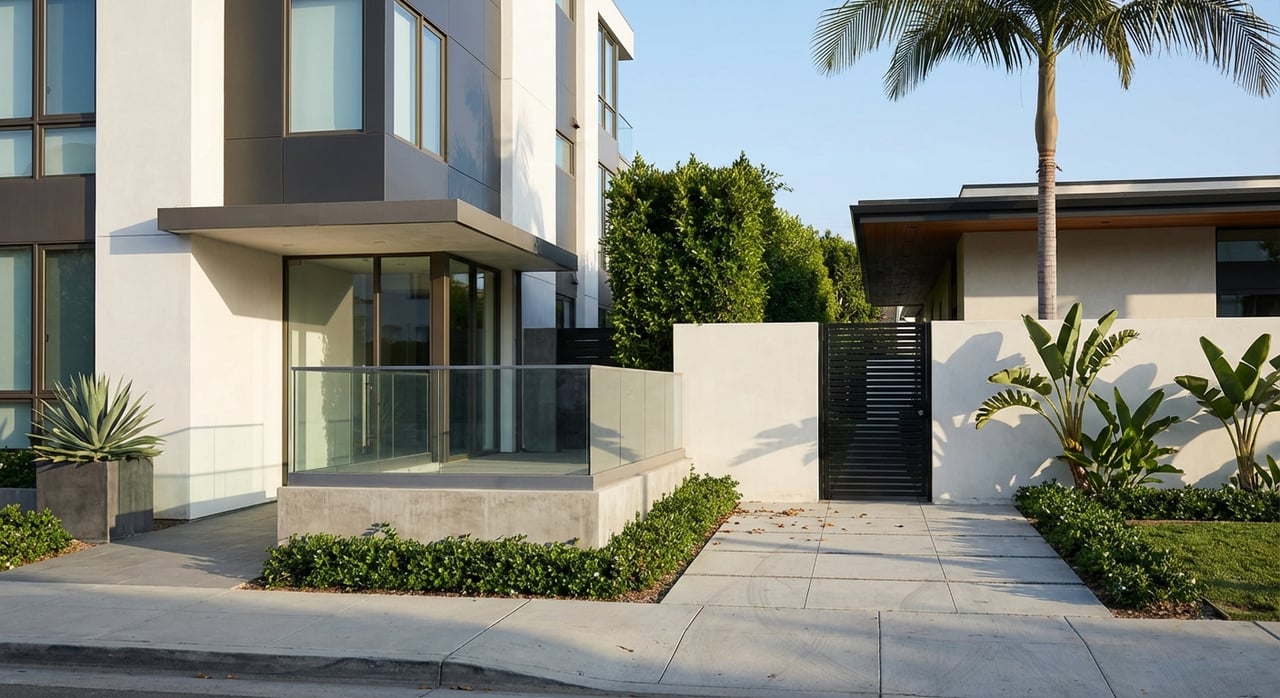
Deciding between a sleek condo steps from Ocean Avenue and a coastal single-family home with private outdoor space is a big call. You want the beach lifestyle, but you also want clarity on costs, rules, and long-term value. In this guide, you’ll get a clear, local framework to compare lifestyle, ownership costs, regulations, and environmental factors in Santa Monica, plus neighborhood context and a practical checklist to make the right move. Let’s dive in.
Santa Monica market at a glance
Santa Monica is a high-value market with different signals depending on the data source. Broad indexes show strong pricing citywide. Zillow’s typical home value has hovered around the mid–$1 million range, while Redfin’s recent median sale price has reported higher. Methodologies differ, but both confirm a premium coastal market with limited supply.
The price gap between condos and single-family homes is meaningful. Recent local reporting places many Santa Monica condos in the roughly $1.0M to $1.4M band, while single-family homes, especially in premium pockets like North of Montana, often trade much higher. You can see these patterns reflected in local condo market breakdowns and ZIP-level notes, including the Santa Monica condo market guide. In many submarkets, single-family homes show stronger pricing power and faster absorption, though well-presented condos near the beach still move quickly when priced right.
Condo vs coastal home: lifestyle fit
Walkability and amenities
If you prioritize walkability, a condo near Ocean Avenue or Downtown puts you close to dining, shops, the E Line, and beach paths. Many buildings offer secured entries, fitness rooms, and shared outdoor spaces. Single-family neighborhoods trade immediate walkability for privacy, quiet streets, and private yards.
Space and privacy
A coastal home usually delivers larger living areas, dedicated work or hobby space, and private outdoor zones suitable for al fresco dining or a plunge pool. Condos emphasize efficient layouts and shared amenities, which can be ideal if you prefer a lock-and-leave lifestyle or a lower-maintenance pied-à-terre.
Maintenance and HOA governance
With a condo, the HOA handles common-area maintenance and building insurance under a master policy. Dues vary widely in Santa Monica. Smaller complexes may charge a few hundred dollars per month, while full-service or beachfront buildings often run $500 to $1,000+ per month. In a single-family home, you manage everything directly, which offers autonomy but requires time and a reserve for repairs.
When you evaluate a condo, review HOA governance and building health carefully. Under California’s Davis–Stirling Act, associations must follow rules on reserves, budgets, assessments, and disclosures. Red flags include underfunded reserves, pending litigation, and recent or upcoming special assessments. You can reference statutory guidance in the Davis–Stirling Civil Code.
Key HOA documents to request:
- Current budget and reserve study
- Board meeting minutes and any special assessment history
- Master insurance declarations and deductible levels
- Litigation disclosures and rules on leasing or renovations
Rental and use rules that shape returns
Santa Monica has strict short-term rental rules. The city generally prohibits vacation rentals of fewer than 30 days unless it qualifies as home-sharing with the host present and properly licensed. If you plan to offset costs with short-term income, confirm legality before you buy by reviewing the city’s housing protection and home-sharing guidance.
For longer-term rentals, HOA bylaws often limit leasing and subleasing, and the city’s rent control law may apply to certain buildings and units. If you’re buying a property with tenants in place, review whether the unit is subject to local rent control, just-cause rules, and registration requirements through the city’s Rent Control resources. Together, city rules and HOA restrictions determine your real rental flexibility.
Environmental and coastal considerations
Santa Monica’s shoreline is a dynamic environment. The city has a Local Coastal Program that guides development and coastal permitting. If you plan to renovate a beachfront or bluff-adjacent property, coastal development permits and shoreline protection policies can shape feasibility and timelines. For background on local coastal policy, see the City’s summary of the Local Coastal Program Land Use Plan.
Sea-level rise and storm surge risk are active planning topics. Tide-gauge records show long-term sea-level trends along the Southern California coast. For scientific context, review Santa Monica measurements via the PSMSL tide-gauge record. For any specific property, pull FEMA flood mapping and consider elevation and coastal hazards. A practical way to start is to run the address through a local guide to FEMA flood maps and insurance basics.
What this means for you:
- Beachfront single-family homes can carry higher long-horizon exposure to permitting constraints, storm events, and insurance complexity.
- Condos set back from the shore may face less immediate exposure, but building-level flood or seismic resilience and insurance coverage still matter.
Cost of ownership: how the math changes
Property taxes
Under California’s Proposition 13, the base property tax rate is 1% of assessed value, plus voter-approved bonds and special assessments. Effective rates in Los Angeles County often land around 1.1% to 1.25%. For a clear overview, see the state’s property tax guide.
HOA dues vs. direct maintenance
- Condos: Budget HOA dues, plus potential special assessments for capital projects like roof, deck, seismic, or garage work. Dues in Santa Monica range widely, and full-service buildings can be at the upper end. Review reserves and recent assessments to understand future exposure.
- Single-family homes: Budget for routine upkeep and a reserve for systems and exterior maintenance. Many owners set aside a percentage of home value each year as a simple planning rule. The benefit is control over scope and timing; the tradeoff is responsibility.
Insurance: earthquake and flood
Standard homeowners or HO-6 policies do not include earthquake coverage. Earthquake insurance is available through participating private carriers and the California Earthquake Authority; uptake remains limited across the state. The California Department of Insurance offers guidance on earthquake options and availability through official consumer resources.
Flood insurance is separate as well. Lenders require it in designated FEMA Special Flood Hazard Areas for federally backed mortgages. Coastal parcels and properties near lower elevations warrant closer review of flood zones, elevation, and building systems, then quotes from both NFIP and private carriers.
Lender considerations for condos
Some lenders apply additional screens to condos, such as reserve funding levels, owner-occupancy ratios, and the presence of litigation or large assessments. Weak financials or governance can limit financing options or increase friction. Review the association’s disclosures carefully and cross-check them with your lender’s condo underwriting requirements. Statutory disclosure context is available under the Davis–Stirling framework.
A quick cost worksheet
Build a side-by-side monthly budget for each property type:
- Condo: Principal and interest, property taxes, HOA dues, homeowners (HO-6) policy, optional earthquake, and any parking/storage fees.
- Single-family: Principal and interest, property taxes, homeowners policy, optional earthquake, optional flood, and a monthly maintenance reserve.
This simple exercise puts walkability, amenities, and autonomy into context with carry costs so you can compare apples to apples.
Neighborhood lenses: where each shines
North of Montana (90402): Primarily single-family homes on larger lots, with premium pricing and a quiet residential feel. Expect multi-million price points and careful, patient inventory. Local ZIP-level notes reflect why single-family homes in this pocket often command a premium.
Ocean Avenue & Downtown (90401/90402): High concentration of condos and luxury buildings near the beach, with view premiums and immediate access to restaurants, retail, and the Promenade. For price bands and building types across condo segments, see this Santa Monica condo market overview.
90403 / 90404 / 90405: A mix of garden-style condos, townhomes, and single-family homes inland, offering broader product variety and relative affordability compared with North of Montana. For a sense of ZIP-level patterns, review a recent 90403 neighborhood update.
A simple framework to decide
Use this step-by-step process to pressure-test your choice:
- Define lifestyle priorities
- Rank walkability, privacy, outdoor space, building services, and lock-and-leave convenience.
- Run the full monthly math
- Compare mortgage, taxes, HOA vs maintenance, and insurance for two or three finalist properties.
- Verify rental rules and tenant context
- Confirm HOA leasing limits and City rules. Check whether a property falls under Santa Monica rent control using the city’s Rent Control resources and short-term rules via Housing Protection.
- Pull environmental and flood data
- Review FEMA flood zones and local coastal hazards. A helpful starting point is this local guide to FEMA flood maps. Cross-check sea-level context via the PSMSL tide-gauge record.
- Evaluate HOA strength (if condo)
- Request the full resale packet and read for reserves, assessments, and litigation. Use the Davis–Stirling framework as a reference for disclosures.
- Confirm insurance paths
- Get quotes for homeowners or HO-6, earthquake, and flood. Use the California Department of Insurance guidance for earthquake basics.
- Consider coastal permitting
- If a property is near the beach or bluff, scope permits and policy guardrails under the City’s Local Coastal Program before you plan major work.
For international and investor buyers
Los Angeles’ coastal submarkets draw global interest, and Santa Monica is often on the shortlist for lifestyle and wealth preservation. If you are purchasing part-time or from abroad, focus on buildings or homes with clear governance, predictable carrying costs, and straightforward use rules. A founder-led advisor can coordinate due diligence, introduce trusted local professionals, and maintain discretion when privacy matters.
Work with a founder-led advisor
Choosing between a Santa Monica condo and a coastal home is about fit, flexibility, and risk management. When you want a private, data-backed strategy and clean execution, schedule a private consultation with Edward Ehsan. You will get principal-level guidance across lifestyle, underwriting, and development feasibility so you can move decisively.
FAQs
What is the price gap between condos and single-family homes in Santa Monica?
- Local reporting places many condos around $1.0M to $1.4M, while single-family homes, especially in premium pockets like North of Montana, often trade much higher.
Are short-term vacation rentals legal in Santa Monica condos or houses?
- The city generally prohibits rentals under 30 days unless it qualifies as licensed home-sharing with a host present; review the city’s Housing Protection guidance.
How do HOA dues and special assessments affect my condo budget?
- Dues vary widely and can run from a few hundred dollars to $1,000+ per month in full-service buildings; always review reserves, minutes, and assessment history under the Davis–Stirling disclosure framework.
What insurance do I need for a condo vs a coastal home?
- Both need homeowners coverage; condos also need HO-6 for interior and contents, and you can add earthquake and flood policies separately; start with the state’s earthquake insurance guidance.
Do coastal permits affect renovations near the beach?
- Yes; projects near the shore may require coastal development permits and must align with the City’s Local Coastal Program, which guides shoreline and bluff-area planning.
How do property taxes work when I buy in Santa Monica?
- Proposition 13 sets a 1% base rate on assessed value plus local bonds and assessments; LA County effective rates often land around 1.1% to 1.25%, per the state’s property tax overview.